It’s more than a desert animal it’s a whole vibe.
You spot 🐫 or 🏜️ in a friend’s caption, a TikTok comment, or a WhatsApp chat about their next trip, and you pause for a second. What is that supposed to mean here? Emoji meanings shift depending on the conversation, the relationship, the tone, the platform, and even the culture behind the chat. That’s exactly why “egyptian emoji” searches keep popping up — people want a quick, clear answer.
There’s something timeless and a little magical about egyptian-themed emojis — they turn ordinary chats into tiny adventures.
What Do Egyptian Emojis Mean?
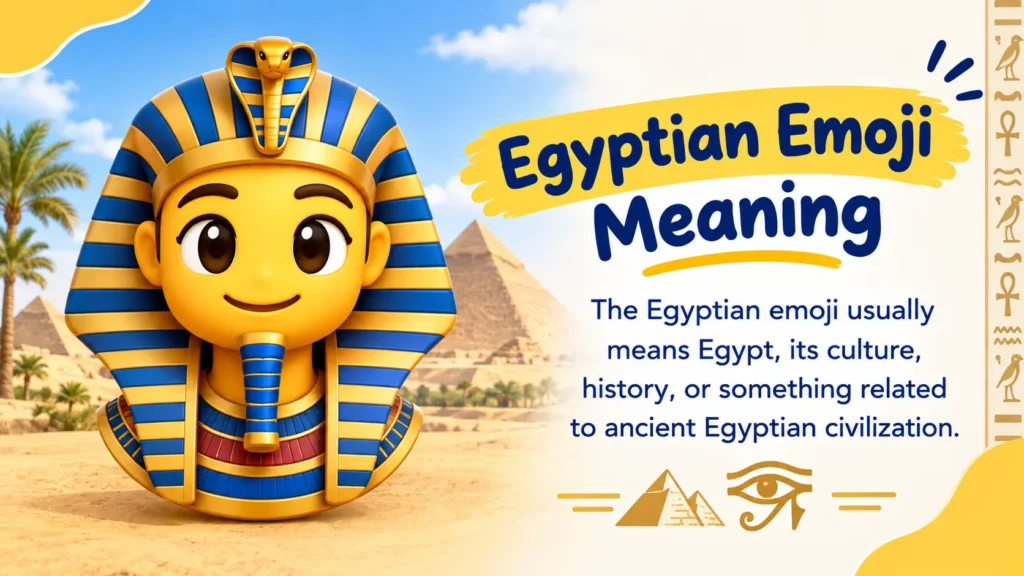
Egyptian emojis aren’t one single symbol. They’re a small family of emojis that people naturally link to Egypt, ancient history, deserts, and mystery — think camels, sun, sand, and old temples.
Each one carries its own mood. 🐫 feels like travel and adventure, ☀️ feels like heat and energy, and 👁️ often hints at something mysterious or watchful. Context always decides the real meaning.
Some of these emojis can also be misread if you’re not paying attention. A scorpion 🦂 might look aggressive out of context, while an eye 👁️ can come across as intense rather than curious. Here’s a quick breakdown:
| Emoji | Core meaning | Misread as | Best used when |
|---|---|---|---|
| 🐫 | Camel, desert travel | Random animal joke | Talking about trips, deserts, patience |
| 🐪 | Long journey, endurance | Just another camel | Describing a long day or trip |
| 🏜️ | Desert, dry heat, isolation | Boring or empty | Talking about heat or remote places |
| ☀️ | Sun, energy, positivity | Basic weather comment | Bright, happy, sunny moods |
| 🔺 | Pyramid shape, structure | Warning sign | History, ancient sites, geometry jokes |
| 🦂 | Danger, sting, drama | Aggression or threat | Playful warnings, “watch out” jokes |
| 🐍 | Mystery, temptation, sneaky vibe | Betrayal or dishonesty | Playful teasing or suspense |
| 👁️ | Watching, awareness, mystery | Creepy or stalker-ish | Curiosity, secrets, “I see you” jokes |
| 🏛️ | History, grandeur, culture | Government or formal talk | Museums, ancient sites, aesthetics |
| 🌴 | Oasis, relaxation, escape | Generic vacation emoji | Chill vibes, breaks, getaway plans |
🐫 Camel
Meaning: Represents desert travel, patience, and adventure.
Example 1: “Can’t wait for this trip 🐫 desert vibes only.”
Example 2: “You’re basically a camel, you never complain.”
🐪 Two-Hump Camel
Meaning: Symbolizes a long, steady journey or endurance.
Example 1: “This exam season feels like 🐪 mode, one hump at a time.”
Example 2: “We’re finally on the road 🐪 let’s go.”
🏜️ Desert
Meaning: Stands for dry heat, wide open space, or emotional distance.
Example 1: “It’s been 🏜️ dry out here, send water.”
Example 2: “My inbox has been a total 🏜️ lately.”
☀️ Sun
Meaning: Represents warmth, energy, and a bright mood.
Example 1: “Morning walk done ☀️ feeling great.”
Example 2: “Your message just made my whole day ☀️.”
🔺 Pyramid Shape
Meaning: Used to represent ancient structure, history, and stability.
Example 1: “Standing in front of these 🔺 is unreal.”
Example 2: “Built this plan like a 🔺, one solid step at a time.”
🦂 Scorpion
Meaning: Adds a sense of danger, sharpness, or dramatic flair.
Example 1: “That comment had 🦂 energy, ouch.”
Example 2: “Careful, she’s got a 🦂 side to her.”
🐍 Snake
Meaning: Suggests mystery, cleverness, or a sneaky twist.
Example 1: “Plot twist incoming 🐍.”
Example 2: “He’s smooth, total 🐍 vibes.”
👁️ Eye
Meaning: Represents watching, awareness, or hidden meaning.
Example 1: “👁️ I see what you did there.”
Example 2: “Keeping a 👁️ on this situation.”
🏛️ Classical Building
Meaning: Refers to history, culture, and timeless architecture.
Example 1: “This place feels 🏛️ ancient and beautiful.”
Example 2: “Museum day 🏛️ let’s go learn something.”
🌴 Palm Tree
Meaning: Represents an oasis, calm, and a break from the heat.
Example 1: “Finally found some shade 🌴 relief.”
Example 2: “This trip is giving 🌴 relaxed energy.”
How to Use Egyptian Emojis the Right Way
On WhatsApp, egyptian emojis usually pop up in personal, casual chats about travel plans, history documentaries, or playful teasing.
Example: “Booked the trip 🐫🌴 can’t wait for this adventure.”
On Instagram, these emojis fit right into captions, stories, bios, and aesthetic travel posts. People use them to build a desert or ancient-history theme, or to add a mysterious edge to their personal branding.
Example: “Lost in the sand and loving it 🏜️☀️.”
TikTok
On TikTok, egyptian emojis show up in comments and captions tied to history facts, travel content, humor, or dramatic reactions. They’re often used ironically, too.
Example: “Me pretending I understood that hieroglyphics video 👁️🔺.”
Do
- Use emojis that match the message.
- Consider the relationship and context.
- Keep combinations natural.
- Use emojis to support the message, not replace it.
Don’t
- Do not overuse emojis in one message.
- Do not assume every person interprets them identically.
- Do not use unrelated emojis just to fill space.
- Do not force emoji combinations into serious conversations.
Best Egyptian Emoji Combos — Copy & Paste
Romantic
- 🐫☀️🌴 — For a sweet message about a dreamy getaway together.
- 👁️🔺 — For telling someone you only have eyes for them.
- 🏛️🌅 — For a message about timeless, lasting love.
Cute
- 🐪🌴 — For a light, playful “let’s go on an adventure” text.
- 🦂😅 — For teasing someone in a cute, harmless way.
- ☀️🐫 — For a happy good-morning message.
Flirty
- 👁️🐍 — For hinting you noticed something intriguing about them.
- 🏜️🔥 — For turning up the heat in a playful chat.
- 🔺👁️ — For a mysterious, “guess what I’m thinking” tease.
Missing Someone
- 🏜️🌴 — For saying things feel empty without them around.
- 🐫🌅 — For thinking about them during a long day apart.
- ☀️👁️ — For letting them know they’re always on your mind.
Good Night
- 🌅🐫 — For wrapping up a long day and heading to rest.
- 🏛️☀️ — For a peaceful, calm goodnight message.
- 🌴👁️ — For a sleepy “see you in my dreams” text.
Trending Egyptian Emoji in 2026
Right now, 🐫, 👁️, 🔺, and 🏛️ are the emojis showing up the most in egyptian-themed content. People use them to add a sense of mystery, history, or adventure to everyday messages.
Travel lovers, history fans, and content creators are the ones leaning into this emoji set the most. They show up often in travel captions, aesthetic photo dumps, and playful “ancient civilization” humor online.
Creators also use these emojis to build a consistent theme across posts, from desert travel reels to museum visits and mythology-based storytelling.
| Emoji | Why trending | Who uses it | Platform |
|---|---|---|---|
| 🐫 | Linked to travel and adventure content | Travelers, content creators | Instagram, TikTok |
| 👁️ | Adds mystery and intrigue | Storytellers, aesthetic accounts | Instagram, TikTok |
| 🔺 | Represents ancient structure and history | History fans, museum-goers | WhatsApp, Instagram |
| 🏛️ | Connects to culture and heritage | Travel and education creators | Instagram, TikTok |
Emoji trends keep shifting as new combinations, jokes, and online moments give familiar symbols fresh meaning.
FAQs
What is the most popular egyptian emoji?
🐫 is generally seen as the most recognizable egyptian emoji. It’s the go-to choice for travel, desert, and adventure-themed messages.
What does 🐫 mean from a girl or boy?
Meaning depends more on context, relationship, and conversation tone than on who’s sending it. The same emoji can mean playful teasing, excitement about travel, or something else entirely.
Why do emojis look different on iPhone vs Android?
Each platform designs its own visual style for the same emoji. That’s why 🐫 or 👁️ might look slightly different depending on the device you’re using.
Are egyptian emojis used differently in other countries?
Yes, culture, language, and online communities all shape how these emojis get used. What feels playful in one place might come across differently somewhere else.
Conclusion
Egyptian emojis bring a sense of adventure, mystery, and history into everyday chats. From a simple 🐫 to a mysterious 👁️, these symbols help express moods that words alone sometimes miss. Used thoughtfully, they add warmth, humor, and personality to any conversation.

Abdullah Kharal is the creator of World Content Press, a platform dedicated to emojis, symbols, and digital expressions.
He creates helpful content to make it easier for readers to discover, understand, copy, and share emojis.
His goal is to build a useful and enjoyable resource for everyone who loves expressing themselves online