A single emoji can sting more than an entire paragraph here’s why.
You open a comment section or a group chat, and there it is: a clown face under someone’s photo, a pile of thumbs-down on a post, or a laughing emoji clearly aimed at making someone feel small. You wonder if you’re overreacting, or if this really is bullying.
The truth is, emoji meanings shift depending on the conversation, the relationship, the tone, the platform, and the culture around it. But some emojis show up again and again in patterns of mockery, exclusion, and harassment and it helps to know what they usually signal.
A tiny picture can carry a very real message about how someone is being treated.
What does bullying emoji mean?
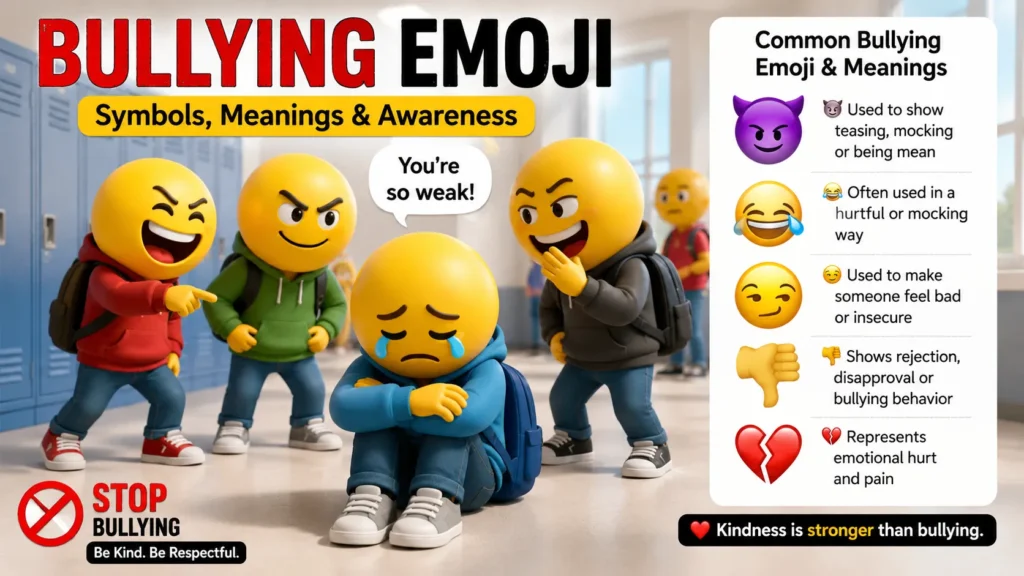
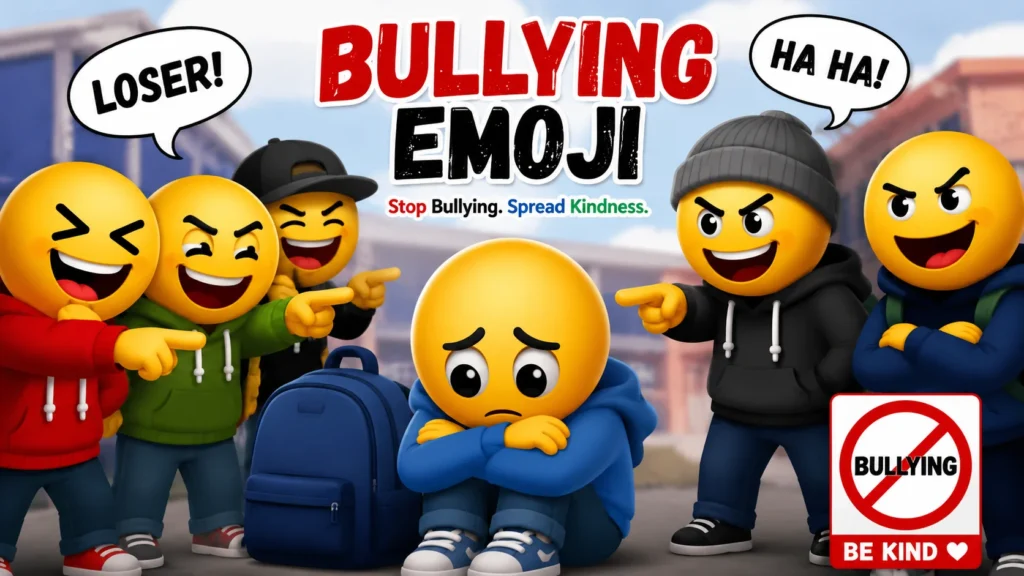
Bullying emoji usually refers to symbols used to mock, exclude, or humiliate someone online, often replacing words that would otherwise be flagged as harassment. They let people say something cutting while pretending it’s “just a joke.”
On their own, none of these emojis are automatically bullying. A clown face can be self-deprecating humor, and a skull can just mean something was funny. Context, repetition, and intent are what turn an emoji into a pattern of harassment.
That’s why it matters who sent it, how often, and whether it’s part of a wider pattern of being targeted, excluded, or mocked.
| Emoji | Core meaning | Misread as | Often used when |
| 🤡 | Calling someone foolish or a joke | Playful self-teasing | Mocking someone publicly |
| 💩 | Saying something or someone is worthless | Crude humor | Insulting a post or person |
| 🙄 | Dismissing or mocking someone | Mild annoyance | Rolling eyes at someone repeatedly |
| 👎 | Rejecting or ganging up on a post | Honest disagreement | Coordinated pile-ons |
| 🐷 | Body-shaming or name-calling | Random meme use | Targeting appearance |
| 🖕 | Direct insult or hostility | Rare, always aggressive | Open confrontation |
| 🤮 | Expressing disgust at someone | Reacting to gross content | Mocking looks or choices |
| 💀 | Laughing at someone’s expense | Reacting to something funny | Mocking a mistake publicly |
| 🗑️ | Saying someone or their work is trash | Talking about actual trash | Dismissing someone’s effort |
| 😂 | Mocking laughter aimed at a person | Genuine shared laughter | Laughing at, not with, someone |
🤡 Clown Face
Meaning: Used to call someone foolish, often to humiliate them in front of others.
Example 1: A group chat repeatedly reacting to one person’s messages with 🤡.
Example 2: A comment section flooding someone’s post with clown faces after a mistake.
💩 Pile of Poo
Meaning: Signals that a person, post, or opinion is considered worthless.
Example 1: Someone replying 💩 under a classmate’s project instead of feedback.
Example 2: A comment thread using 💩 to dismiss everything one person posts.
🙄 Face With Rolling Eyes
Meaning: Dismissing or mocking someone as annoying or beneath a response.
Example 1: A friend group repeatedly replying to one member with only 🙄.
Example 2: Using 🙄 every time a specific person speaks in a chat.
👎 Thumbs Down
Meaning: A coordinated way to reject or gang up on someone’s content.
Example 1: A wave of 👎 reactions appearing the moment one student posts.
Example 2: Every comment from one person getting downvoted regardless of content.
🐷 Pig Face
Meaning: Used to body-shame or mock someone’s appearance or eating habits.
Example 1: Sending 🐷 in response to a photo to mock someone’s weight.
Example 2: Repeating 🐷 as a nickname aimed at one person in a group.
🖕 Middle Finger
Meaning: A direct, aggressive insult with no ambiguity.
Example 1: Sending 🖕 in a chat to provoke a specific person.
Example 2: Using 🖕 repeatedly in comments to escalate conflict.
🤮 Face Vomiting
Meaning: Expressing exaggerated disgust aimed at a person’s looks or choices.
Example 1: Replying 🤮 to someone’s selfie to humiliate them.
Example 2: A group using 🤮 every time one person shares an opinion.
💀 Skull
Meaning: Laughing at someone’s mistake or embarrassment, often at their expense.
Example 1: Flooding someone’s post with 💀 after they made an error.
Example 2: Screenshotting someone’s message and adding 💀 to mock it publicly.
🗑️ Wastebasket
Meaning: Telling someone their work, opinion, or presence is worthless.
Example 1: Commenting 🗑️ under a classmate’s assignment or art.
Example 2: Using 🗑️ to describe one person’s contributions in a group project.
😂 Face With Tears of Joy
Meaning: Mocking laughter aimed directly at a person rather than with them.
Example 1: A group repeatedly replying 😂 whenever one person makes a mistake.
Example 2: Screenshotting a private message and posting it with 😂 to embarrass someone.
How bullying emoji shows up across platforms
In group chats, bullying emoji often appears as repeated reactions aimed at one person the same emoji used every time they speak, regardless of what they say.
Example: A group consistently reacting to one member’s messages with 🤡, no matter the content.
On Instagram, it shows up in comment sections, story replies, and reaction spam under a specific person’s posts, often as a coordinated pile-on rather than a single comment.
Example: A photo gets flooded with 🐷 or 🤮 comments shortly after being posted.
TikTok
On TikTok, bullying emoji frequently appears in comment sections targeting a creator’s appearance, mistakes, or opinions, sometimes spreading quickly through duets or stitches.
Example: A video gets hundreds of 💀 or 🗑️ comments mocking the same person.
Do
- Take note if the same emoji targets one person repeatedly.
- Save screenshots if you’re documenting harassment.
- Talk to a trusted adult, moderator, or platform support if it escalates.
- Support someone being targeted instead of staying silent.
Don’t
- Don’t assume a single emoji automatically means bullying.
- Don’t respond by escalating with more aggressive emojis.
- Don’t ignore a repeated pattern aimed at the same person.
- Don’t dismiss someone’s discomfort just because “it’s only an emoji.”
What to do if you see bullying emoji used against someone
If you notice a pattern rather than a one-off reaction, it’s worth taking seriously. A few things genuinely help:
- Check in privately with the person being targeted, rather than commenting publicly.
- Report the comments or messages through the platform’s built-in reporting tools.
- Avoid engaging with the people sending it, since a reaction often encourages more.
- Loop in an adult or moderator if it’s happening in a school, workplace, or family group setting.
Emoji-based harassment can be harder to prove than written insults, but it still causes real harm and it’s still worth addressing.
Bullying emoji trends in 2026
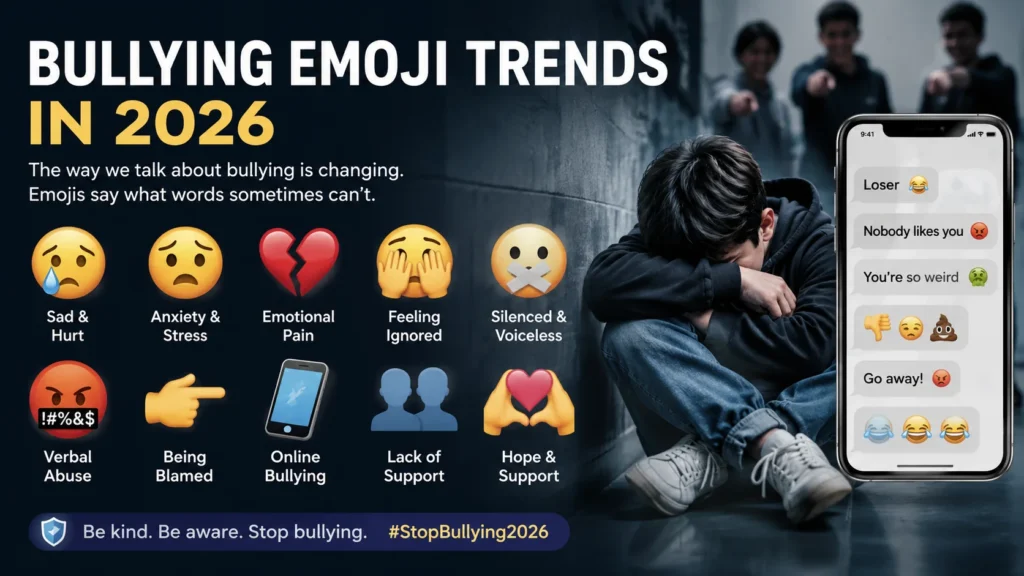
A few emojis from this group have become especially common in online pile-ons recently. 💀, 🤡, and 🗑️ show up often in comment sections aimed at mocking someone’s mistake or appearance.
Younger users tend to use these emojis the most, since they’re quick, low-effort, and easy to send in large numbers during a group pile-on. They’re commonly seen on TikTok comment sections and Instagram reply threads, especially under viral or embarrassing content.
Creators and moderators increasingly watch for repeated single-emoji comment floods as an early sign of coordinated harassment rather than casual reactions.
| Emoji | Why common | Who uses it | Platform |
| 💀 | Quick way to mock a mistake at scale | Younger users, comment sections | TikTok, Instagram |
| 🤡 | Signals ridicule with minimal effort | Group chats, comment pile-ons | WhatsApp, Instagram |
| 🗑️ | Dismisses a person’s content instantly | Comment sections, forums | TikTok, Instagram |
The way these emojis get used tends to shift as new slang, reaction trends, and platform features change over time.
FAQ
What is the most common bullying emoji?
🤡 and 💀 are among the most frequently used, since they’re quick, low-effort ways to mock someone in comments or group chats without writing anything directly.
Does it matter if a girl or boy sends it?
Not really meaning depends more on context, relationship, and pattern than on who sent it. The same emoji can be harmless once or harmful when repeated at one person.
Why do these emojis look different on iPhone vs Android?
Each platform designs its own visual version of the same emoji, so a clown face or skull may look slightly different depending on the device being used.
Is emoji-based bullying taken as seriously as written bullying?
Most platforms treat repeated targeted emoji use as a form of harassment, especially when it’s part of a pattern. It’s worth reporting the same way you would write insults.
Conclusion
Emojis can carry real weight, especially when the same one keeps landing on the same person. Recognizing the pattern is the first step toward doing something about it.
If you’re seeing this happen to someone, checking in or reporting it can matter more than staying quiet.
If you’re experiencing this yourself, it’s okay to reach out to someone you trust; this isn’t something you have to sort out alone.

Abdullah Kharal is the creator of World Content Press, a platform dedicated to emojis, symbols, and digital expressions.
He creates helpful content to make it easier for readers to discover, understand, copy, and share emojis.
His goal is to build a useful and enjoyable resource for everyone who loves expressing themselves online